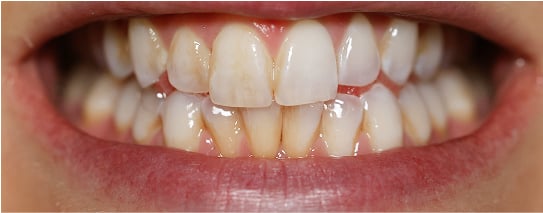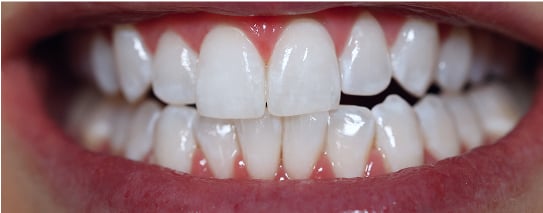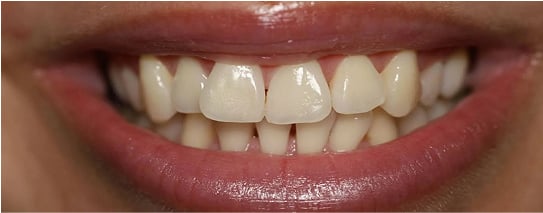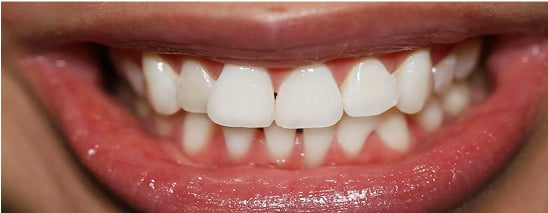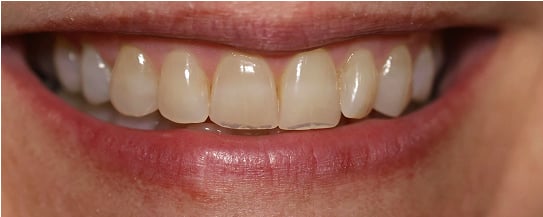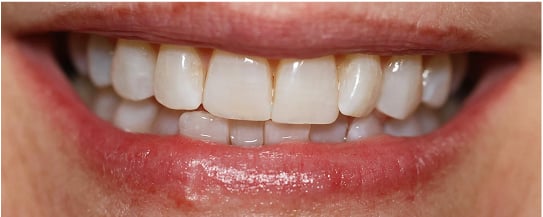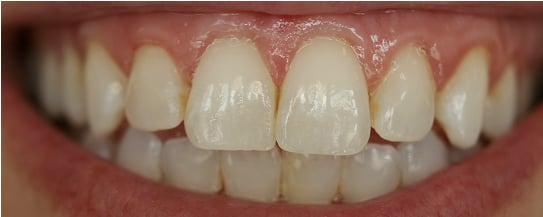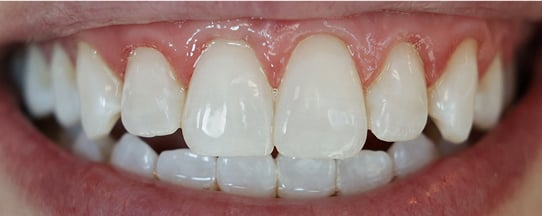




Your resting expression leaves a lasting impression, but your resting tongue position has more influence than you might think. Where is your tongue right now? When your mind is locked on the endless scroll or LA commute, your tongue might drop from the roof of your mouth or press against your teeth. The subtle pressure of the most powerful muscle in your face (a.k.a. your tongue) can change your face shape, cause tension headaches, and contribute to TMJ symptoms.
At The Gleamery, we believe smile care is holistic. Not just cleaning and polishing your teeth for a brighter smile, but assessing the structure of your jaw and your resting oral posture affects your facial harmony, sleep quality, and TMJ discomfort. Explore how oral myofunctional therapy can improve your resting oral posture, retrain your oral muscles to support breathing, and benefit your overall wellness from the inside out.
Where Is Your Tongue Resting Right Now?
Take a second to unclench your jaw and relax your tongue. Feel the difference? That instant feeling of relief when your tongue is no longer pressed tightly against the roof of your mouth or resting low near your lower teeth is proof of how interconnected your facial tissues are.
A tongue in a poor position directly influences your breathing patterns, jaw development, and sleep quality. And yes, tongue posture can make tech neck worse.
Nasal Breathing
Nasal breathing is your body’s preferred method. It filters and humidifies the air for your lungs, and even regulates breathing rhythms to reduce physiological stress. The ideal oral posture for nasal breathing is a tongue that rests against the roof of the mouth, lightly touching the upper front teeth. A low tongue forces chronic mouth breathing, which is overall more stressful on the body, whether you’re asleep or awake.
Jaw Development
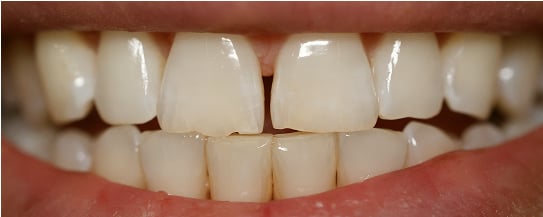
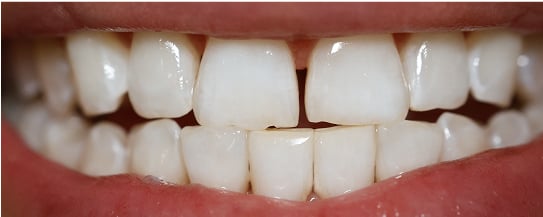
The development of the jaw is guided by the surrounding muscles, especially the tongue. When the tongue rests against the upper palate, the jawbone naturally develops wider to give enough room for permanent teeth to grow and guides the lower jaw to grow forward. A dropped tongue causes a high, narrow palate, which is prone to dental crowding.
Airway Health
A weak or retracted lower jaw leads to airway collapse. If you’re a back sleeper, a weak tongue that falls backward can obstruct your airway and relax your throat, causing snoring, fragmented sleep, mouth breathing, and fatigue.
Tech Neck
Tech neck is a forward-head posture that happens when your tongue rests low in your mouth. To compensate for this, your entire head often shifts forward to keep your airway open. Over time, a low-resting tongue weakens deep neck flexors, worsening tech neck as your cervical spine struggles against gravity. Add in the stress of the LA hustle, and you have a perfect recipe for bruxism and TMJ discomfort.
Is Your Jaw Pain Linked to Your Tongue Position?
Yes, jaw pain is often associated with orofacial dysfunction. The connection between the two is simple: when your tongue rests too low in the mouth or puts too much pressure on your teeth, the balance of your facial and neck muscles is thrown off-kilter. Extra stress on your facial muscles from overcompensating for poor oral posture causes strain, jaw clenching, and tension in the temporomandibular joint.
What Does Orofacial Dysfunction Look Like in Daily Life?
Orofacial dysfunction impacts every aspect of your life. Long-term imbalances can affect facial muscle tone, lead to bruxism, or cause the relapse of orthodontic treatments. Eating can be messy, sleep can be punctuated with snores, and you may even notice a lisp when you speak. The common signs of weak orofacial posture include:
- Habitually parted lips
- Low tongue position
- Forward head position
- Chronic mouth breathing
- Snoring
- Dry mouth
- Articulation challenges
- Crooked teeth
- Difficulty chewing food properly
Orofacial Myofunctional Therapy: What It Is and How It Helps
Oral myofunctional therapy is a type of physical therapy that retrains the muscles of your tongue, face, and throat to improve breathing and resting oral posture, thereby improving overall airway health. The goal of myofunctional therapy is to harmonize the muscles of the oral cavity through daily exercises to improve sleep, speech, and jaw health. Three elements of a healthy resting tongue posture are:
- Lips that stay together at rest
- Slight space between the upper and lower teeth
- Tongue resting on the roof of the mouth
Orofacial myofunctional therapy supports your overall health by strengthening upper airway muscles, shifting breathing to the nose to regulate the nervous system, and improving diction. Orofacial therapy is a functional wellness hack with whole-body benefits.
How Can Muscle Exercises Change the Way You Breathe, Smile, and Sleep?
Myofunctional exercises work to retrain oral muscle habits over time so you can rest better, breathe more efficiently, and smile with more confidence.
Breathing
You can build tongue strength by sticking your tongue out and attempting to touch your nose or chin. It sounds silly, but this exercise helps open up the nasal passage so you can breathe through your nose.
Pursing your lips or holding a coin between them builds endurance in your lip muscles. More endurance means your lips can stay closed comfortably, naturally reinforcing nasal breathing.
Sleeping
Orofacial exercises for sleeping focus on strengthening the muscles in the mouth and throat to tone the airway and prevent airflow blockages at night. Stretching the tongue and soft palate consistently keeps the airway naturally open.
Smiling
Orofacial therapy improves muscle tone to support your facial features and counteract gravity's effects on your face. Puffing out your cheeks, smiling exercises, and working your jaw muscles encourage better facial symmetry and improve symmetrical movement for an even smile.
How Can You Find a Myofunctional Dentist in Los Angeles?
Although our Gleamery experts do not offer orofacial myofunctional therapy, our Gleam 360 Assessment can identify signs of orofacial dysfunction. As the hub of your holistic care, we focus on your dental wellness and alignment, coordinating care with a myofunctional dentist in Los Angeles for adult tongue therapy to support your dental wellness.
Orofacial Therapy: Common Questions
How do I know if I have an orofacial myofunctional disorder?
Signs you need myofunctional therapy include habitual mouth breathing, lisps, misaligned teeth, and a tongue that rests against your front teeth. Guests with an orofacial myofunctional disorder may have underbites, overbites, jaw pain, bruxism, and snoring. You may have even noticed these signs since you were a child.
Is tongue therapy just for kids with thumb-sucking habits or tied tongues?
No. Tongue therapy is physical therapy for your face, so it’s beneficial for everyone. Adults who retrain their orofacial muscles can benefit from improved oral posture, reduced snoring, waking with a dry mouth less frequently, and easier speech.
Can myofunctional exercises help with my TMJ or jaw clicking?
Absolutely. Myofunctional exercises relieve muscle tension in the face and neck, correct resting tongue posture, and strengthen jaw muscles so the jawbone moves smoothly. The result is less popping and clicking when you move the jaw, as well as reduced discomfort.
How long does it take to see results from myofunctional therapy?
Most guests will see results in four to six months with regular myofunctional exercises. The initial results will appear a few weeks after myofunctional therapy starts and will gradually improve with consistent practice.
What is the difference between orthodontics vs orofacial therapy?
Orthodontics improves the alignment of the teeth and jaw using braces or clear aligners, such as The Gleamery’s GleamFit Overnight Aligners. Orofacial therapy focuses on retraining facial muscles to achieve a healthy oral posture and on improving habits to sustain muscle strength. The key overlap between the two is that poor tongue posture can undo the results of orthodontic treatments by applying pressure to the teeth with the tongue.
Oral Myofunctional Therapy Is the Missing Piece in Your Wellness Routine
Orofacial dysfunction can impact every part of your life, from the confidence of your smile to how easily you breathe. Myofunctional therapy corrects functional habits to improve facial muscle tone and posture, making sleeping, breathing, and speaking easier. It’s not just about maintaining your results after orthodontic treatments.
Stop clenching and start breathing better. Schedule a Gleam 360 Assessment to see whether myofunctional therapy should be part of your wellness-first smile-care at The Gleamery in LA.
Functional Physical Therapy: Myofunctional therapy is physical therapy for your face, utilizing simple, consistent exercises to build muscle endurance and airway health.
Professional Assessment: Use The Gleamery’s 360 Assessment as a starting point to identify dysfunction and find the right local specialists for your care.